
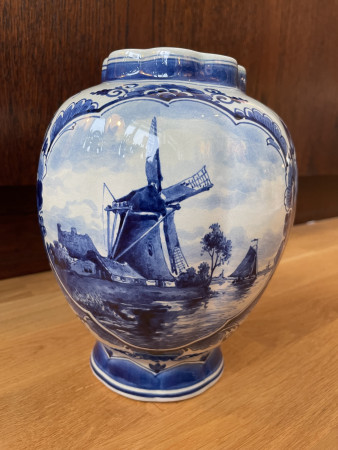
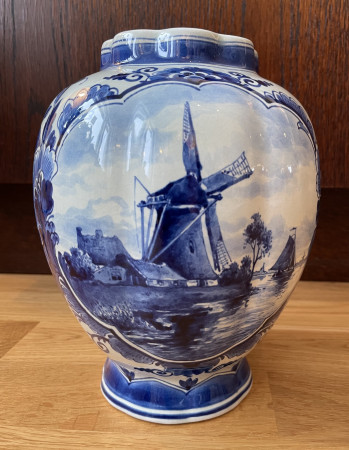
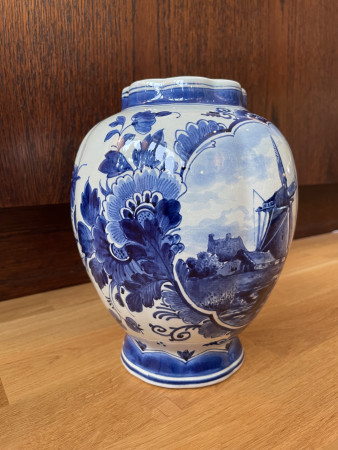
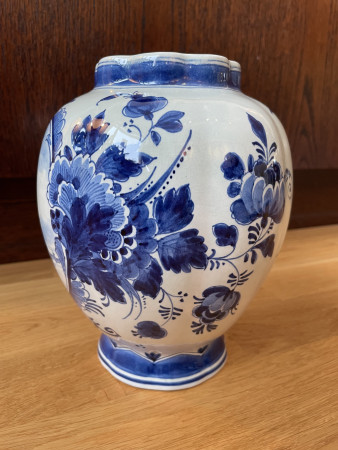
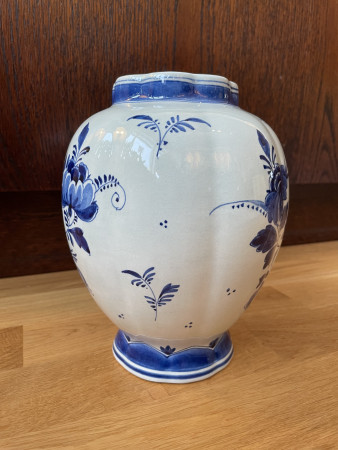
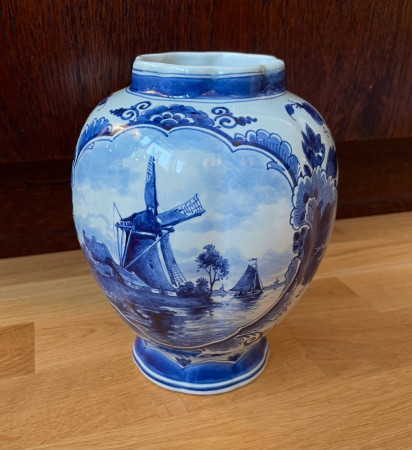
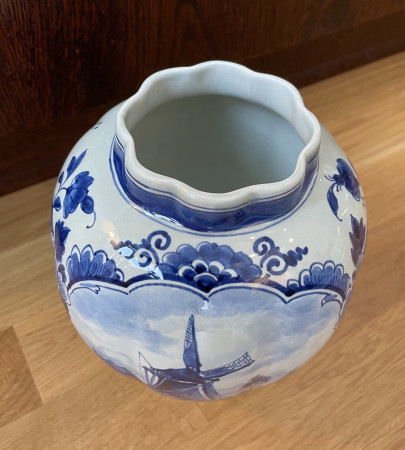
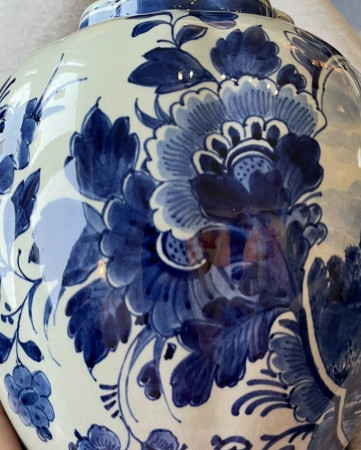
A Vase with the mark of Royal Delft. Blue and white, appears hand painted. Painting of a windmill by the water with houses and a boat.
Vraag
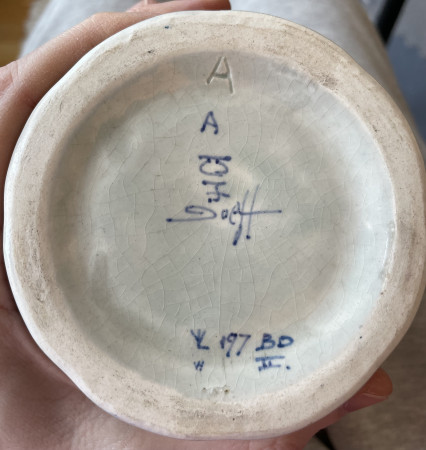
Kindly request help to decode the additional signatures to determine year and painter.
Afmetingen
Height ca 21 cm
Collectie
publiekscollectie












Reacties 5
This vase was painted by two painters in 1934 (BD). Theo van Lingen (1893-1945) probably painted the landscape and G. van Heijenoort (1891-1940) the border decoration. It is an "A" design that at the time was sold slightly cheaper due to, for example, a flaw in the glaze, the painting, or other matters.
An 'A' or 'B' above a model or article number? Then it concerns a quality/price classification, especially from the crisis years. Usually stamped and also painted.
kind regards Franky
In reply to This vase was painted by two… by FrankyStevelinck1202
Thank you so much for you’re help Franky! I’m happy to know more about this beautiful vase. In your opinion, was this type of vase a common product for Royal Delft at this period?
Kind regards Joakim
In reply to Thank you so much for you’re… by JoRo
The shape of the vase was certainly characteristic of the period. However, the landscape with the windmill can still be seen today in their production on vases, plates, cups, etc. The windmill is very typical of the Netherlands, hence.
Below are a few examples of contemporary hand-painted pottery.
In reply to The shape of the vase was… by FrankyStevelinck1202
Thank you!
Verdict:
Analysis:
Met dank aan Franky Stevelinck voor de details.
Add new comment
Only logged in users can post comments
Log in or register to post comments