Zoeken
Gedeelde publieksvoorwerpen

Laatste reacties
Dear woutersubb,
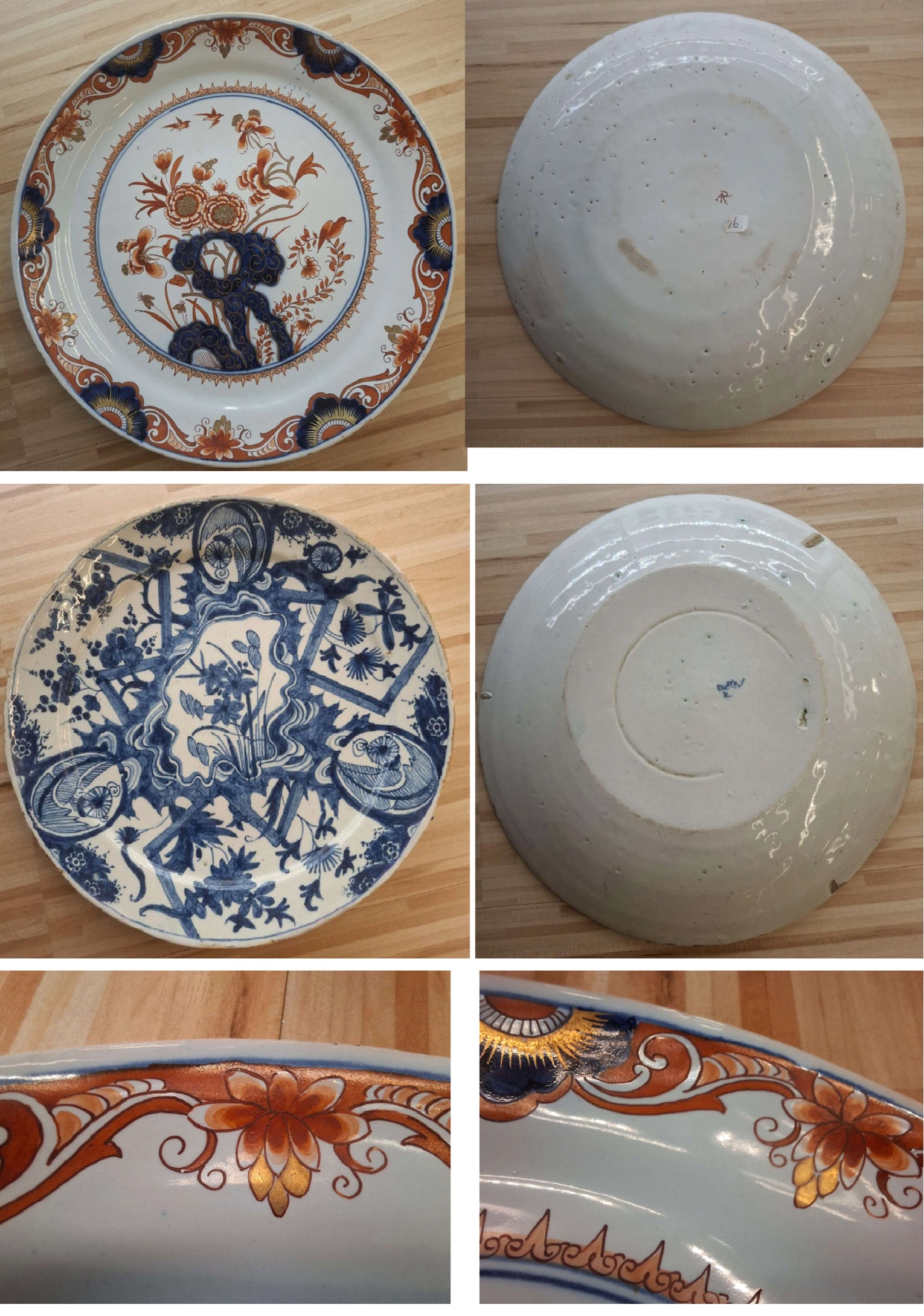
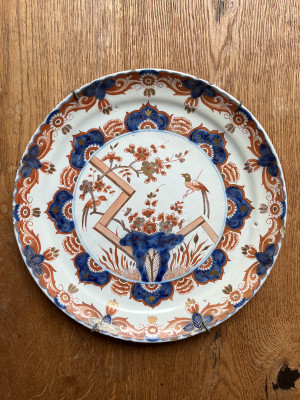
In my opinion, Jeroen is right on the mark here: this is an imitation by Géo Martel from Desvres. The motif is illustrated in the book Jeroen mentioned on page 122 under no. 10.61. While the plate may not have a very high collector's value, it is by no means worthless. Precisely because you now have both an original plate (the one Jeroen referred to as "hkb") and an imitation ("bb") from the 1910s/1920s in your collection, the Martel plate is of definite practical value as a reference piece.
In addition to the book "L'héritage de Delft à Desvres" (which I can highly recommend acquiring as an identification guide!), I also have a few pieces by Martel as well as (in my opinion!) originals by "PAK" in my collection. In a direct side-by-side comparison, I have made the following observations:
- Tactile qualities (Feel):
- Weight and thickness of the body: The Martel pieces are thick and heavy (307g at 22 cm diameter for the Imari, and 355g at 23 cm diameter for the Camaïeu). My originals are thinner and lighter (261g and 249g at 22 cm and 21.6 cm diameter, respectively).
- The enamels/colors (especially the red) are flat on the Martel pieces. If you run your finger over the painted decoration, you can barely feel anything. On the originals, the red is thickly applied and distinctly tangible to the touch (see also the close-up photos).
- Visual characteristics:
- The kwaart on the imitations has a hard, brilliant sheen; the lead glaze on the originals has a softer luster (unfortunately, the photos cannot adequately capture this).
- As Jeroen has already noted (and as can be seen in my photos), Imari pieces from De Grieksche A usually feature decoration in iron red on the reverse—often small flowers intended to disguise the marks left by the pennen, or Daoist motifs. Martel didn't go to that trouble.
- Martel pieces often exhibit a sort of "inner ring" on the foot rim/base (particularly pronounced on the Camaïeu, though also visible on the Imari imitation). The foot rim on the originals is clean and smooth.
- When it comes to the colors, I wouldn't want to make a definitive statement. The blue on my PAK pieces is lighter, paler, and less saturated in tone than on the imitations, which look almost too "fresh." However, there are also originals where the exact opposite is true (Jeroen will likely have better comparative examples for this 😊).
Note on weight: I have a "WK"-marked Imari pannekoekenbord in my collection, which at 313g with a 22.6 cm diameter is also heavier and thicker than the "PAK" pieces. Therefore, I would only use weight as an indicator for PAK pieces.
Has anyone else made similar observations or would like to add information?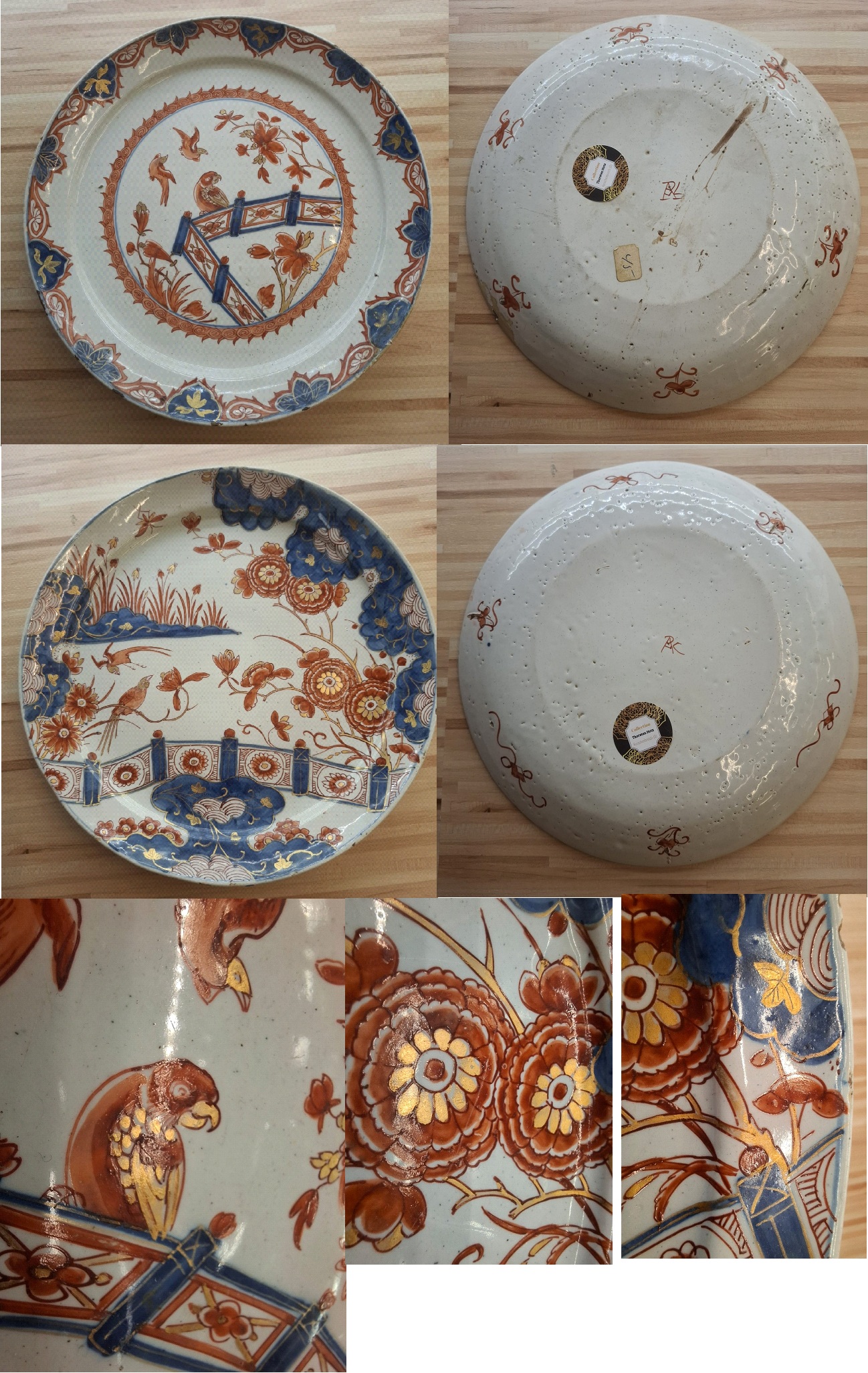


Thank you for your comments. Please find below some more (hopefully better) pictures.
Kind regards, Thorsten


This vase in shape of a calabash has a mark I have never seen before and I am wondering if someone else has seen this mark before or knows it.