
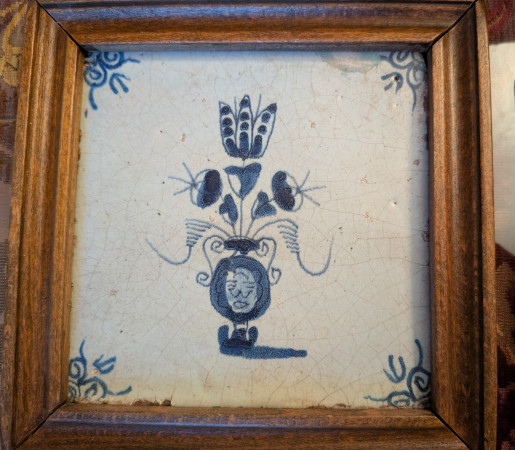
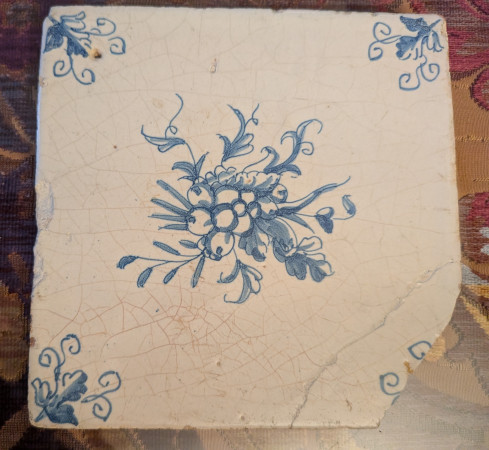
These are architectural tiles we recently purchased at a shop in Delft. We were told they are late 17th century. The one with the broken corner has oak leaf corner ornaments that are said to be rare. The tiles were removed from an architectural setting with remains of plaster on the backs, so any marks are not visible.
Vraag
We have no reason to believe these tiles are not authentic, but are interested to hear opinions. We were told that tiles like this are still being removed from old buildings, which seems a shame.
Afmetingen
About 5 inches by 5 inches.
Collectie
publiekscollectie












Reacties 2
Indeed , your tiles are around 1680-1700.
Kind regards,
Beoordeling:
Toelichting:
Although these tiles are most commonly referred to as “Delft”, the majority were in fact produced elsewhere in the Netherlands. It is difficult to determine with certainty whether the present examples were made in Delft itself, but they are unquestionably Dutch, and both date to the 17th century. The tile on the right is the earlier of the two, made in the first half of the 17th century, and decorated with rare corner ornaments known as the “oak-leaf” type. The tile on the left, depicting a flower pot, dates to the second half of the 17th century and is decorated with so-called ox-head corner motifs.
Reactie toevoegen
Alleen ingelogde gebruikers kunnen reacties plaatsen
Login of registreer om te reageren