
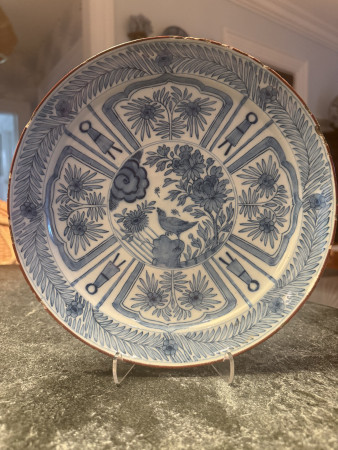
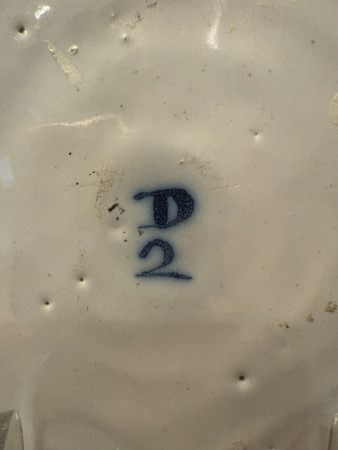
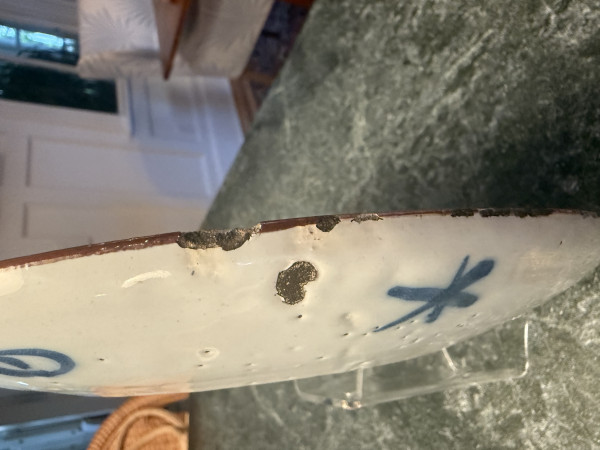
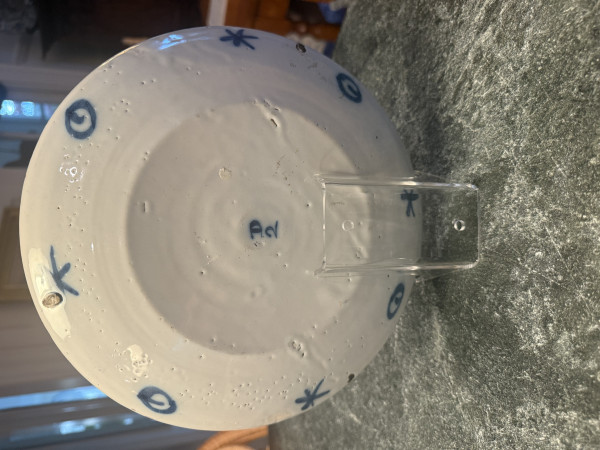
Pair of plates with klapmutsen decorative architecture, in the Ming style with bird on a rock motif, surrounded by 4 broad floral compartments and 4 narrow compartments with stylized ribbon motifs. Reverse with D/2 mark and alternating circles and asterisks.
Vraag
Have you encountered other Delft dishes using this particular decorative organization? I would also be very interested in any thoughts on the D/2 marks, date, or possible factory.
Afmetingen
10”
Collectie
publiekscollectie











Reacties 5
These were made by Jan Teunis Dextra, owner of De Grieksche A, 1757-1765. The decorations on this plate are a typical example of Chinoiserie symbolism: the Dutch interpretation of traditional Chinese symbols of luck. The depiction consists of the central medallion and the border panels.
The central scene
Bird on a rock: In Chinese art, a bird on a rock (often combined with flowers) represents steadfastness, peace, and a long life.
Peonies & Chrysanthemums: The large flower branches symbolize wealth, honor, and prosperity (peony) as well as longevity and integrity (chrysanthemum).
The Cloud (with spiral motif): In the top left of the circle, you can see a stylized cloud. This stands for heavenly blessings and happiness.
The compartment layout (Cartouches)
Large panels with flowers: The wide panels contain stylized flower motifs and leaves that depict the changing seasons and natural harmony.
Narrow panels with symbols: In the narrow spaces between, you can see abstract symbols. In the original Chinese porcelain, these represented the 'Eight Treasures' (like the rolled fan, double gourd, or the knot symbol), which stand for luck, health, and protection.
see also : https://delftsaardewerk.nl/merk/d-dextra
Inder an example of an original Chinese plate.
kind regards
Als antwoord op These were made by Jan… door FrankyStevelinck1202
Amazing! Thank you so much! Do you have the source/date/ dimensions for the plate you posted? My plates are an almost exact copy which is incredible!
Als antwoord op Amazing! Thank you so much!… door krpaquette
Here is a similar dish but with a different edge and the same theme.
https://haffmansantiek.nl/kraakporseleinen-schotel-wanli-periode-ca-162…
Here's one from the Princesshof Museum as well.
https://www.museumprinsenhofdelft.nl/collectie/144223
Als antwoord op Here is a similar dish but… door FrankyStevelinck1202
Thank you - yes I am very familiar with the classic 8 panel border Kraak design architecture - I collect Kraak ware and have several of these chargers. I was looking for the source for the first plate you posted that you said was original Chinese? Where is that from?
I bought the pair of delft because I wanted to add Dutch examples of transmission to my collection and had never seen this particular architecture - with the very familiar bird on a rock motif but with 4 instead of 8 cartouches and the continuous distinct border, laid out more like a klapmuts bowl than a typical Kraak charger . Here are my plates shown with a Ming dynasty Chinese Klapmuts in between.
Edit to add: I think I misunderstood you on the first plate you posted, as that looks like another example of my Dutch plate, and not a Chinese porcelain example. Do you have information on that plate?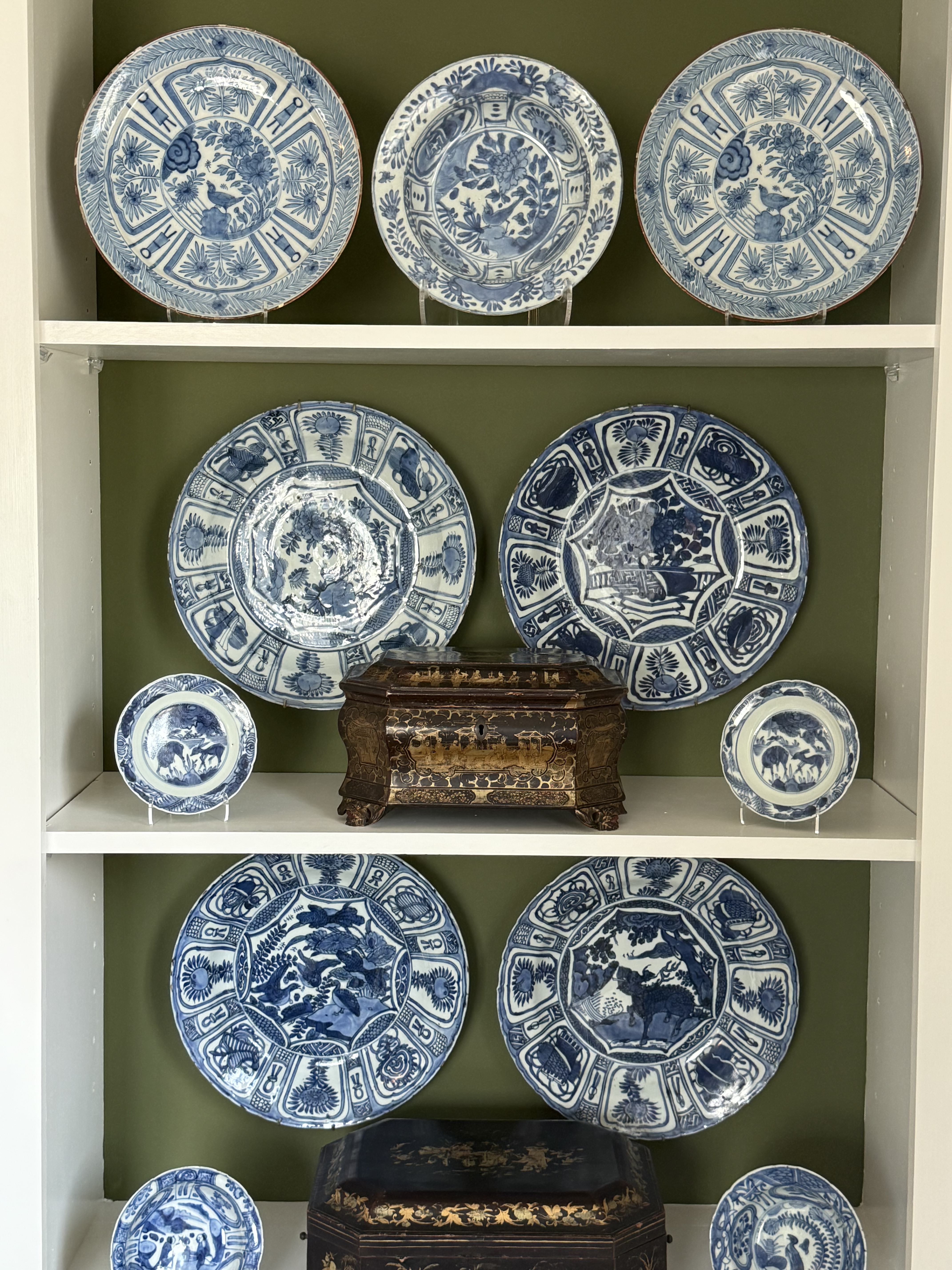
Als antwoord op Thank you - yes I am very… door krpaquette
Beautiful collection! The link to the wall plaque is this one: ;
https://www.ebay.co.uk/itm/158197876731?itmmeta=01M197R8SBC7EFKMZ5F1NT3…
Kind regards
Reactie toevoegen
Alleen ingelogde gebruikers kunnen reacties plaatsen
Login of registreer om te reageren